





 1 Min
1 Min In Clinical

Follow this topic

Bookmark

Record learning outcomes
Hay fever (seasonal allergic rhinitis) affects up to 25% of people in the UK, including 10% of 6-7-year-olds and 15% of 13-14-year-olds
Prevalence can be affected by the following factors:
- Gender: More males than females suffer before adolescence, with more females than males suffering post-adolescence
- Age: Peek prevalence occurs in the third and fourth decades, with some evidence for remission in later adulthood
- Geography: Prevalence has increased significantly in the last four-to-five decades in the UK. Our country and Sweden have the highest prevalence of hay fever in Europe
- Other conditions: More than 40% of people with hay fever have asthma and 80% of people with ashtma have hay fever.
Causes
Allergens responsible for hay fever include grass pollens, tree pollens and fungal mould spores. People can be allergic to one type of pollen. Allergic rhinitis on exposure to cats and dogs is also relatively common and sometimes horses, rabbits, pet rats, hamsters and guinea pigs as well.
Types of pollen
Around 95% of hay fever is triggered by grass pollen, which tends to be highest between mid-May and July although the season can extend from April to September.
The first pollen to be released during the hay fever season.
This can also be a trigger for hay fever: highest from the end of June to September.
Advice on avoiding allergens
- Know which types of pollen act as triggers
- Keep an eye on the daily pollen forecast and stay indoors when the pollen count is high
- Keep doors and windows shut when possible
- Wear wrap around sunglasses to protect the eyes
- Wear glasses instead of contact lenses
- Bathe eyes in cold water
- Apply petroleum jelly to the nostrils to trap pollen
- Avoid grassy areas, such as parks and fields, particularly in the early morning, evening or night when the pollen count is at its highest
- If you have a lawn, try asking someone else to cut the grass for you
- Shower and change your clothes after being outside
- Avoid drying clothes and bedding outside when the pollen count is high
- Vacuum regularly and dust with a damp cloth
Management
Hay fever can be managed using a variety of treatments, the most popular of which are antihistamines.
Types of antihistamines


Oral antihistamines are considered clinically efficacious for treating mild to moderate as well as intermittent symptoms of allergic rhinitis.
They are effective in reducing sneezing and runny nose but less so in reducing nasal congestion. They usually work within a day
They should be taken regularly rather than when needed in cases of persistent hay fever
They can be recommended as an addition to intranasal steroids for moderate/severe persistent rhinitis uncontrolled on topical intranasal corticosteroids alone, particularly when eye symptoms are present
Non-sedating antihistamines available OTC include acrivastine (taken three times daily), cetirizine (taken once daily) and loratadine (taken once daily)
Compared with older antihistamines, non-sedating antihistamines cause less sedation, but some people do experience drowsiness. Anticholinergic effects (e.g. dry mouth, blurred vision, constipation, urinary retention) are very much lower in the newer drugs
Acrivastine has the fastest onset of action but needs to be taken three times daily
For sale OTC, loratadine can be recommended for children over two years, cetirizine over six years and acrivastine over 12 years
Older antihistamines (diphenhydramine, promethazine) have a greater tendency to cause sedation; other older antihistamines (chlorphenamine) are relatively less sedative but sedation can still be a problem
Sedative and anticholinergic effects are increased if the person is taking other medications with anticholinergic (e.g. tricyclic antidepressants, haloperidol, metoclopramide, prochlorperazine) and sedative (e.g. hypnotics, sedatives, anxiolytics) effects respectively Alcohol also increases sedative effects
Antihistamines should not be used by patients with narrow/closed angle glaucoma and should be used with caution in liver disease and prostatic hypertrophy
Nasal antihistamines (azelastine nasal spray) are for mild to moderate, intermittent and mild persistent rhinitis in children over 5 years
They are superior to oral antihistamines in reducing nasal obstruction
They have a rapid onset of action and can be used as ‘on demand’ rescue therapy for symptom breakthrough. However, continuous treatment is more clinically effective than on demand use
They can be effective in patients in whom there has been previous failure of oral antihistamines
They are less effective than an intranasal steroid in relieving the symptoms of allergic rhinitis
The BNF suggest treatment should begin two-three weeks before the start of the season
Treatment with both an intranasal and oral antihistamine confers no additional advantage in alleviating nasal symptoms
What to do with persistent symptoms
- Check adherence to medication, use and dose taken or used
- Consider adding cromoglicate eye drops if eye symptoms persist
- Consider adding a topical decongestant to antihistamine therapy or in patients starting to use a nasal corticosteroid if nasal congestion is severe
- If symptoms still persist, refer to GP who may prescribe a nasal corticosteroid with a nasal antihistamine
- If treatment still fails, the patient may be referred to a specialist or prescribed intranasal ipratropium, a leukotriene receptor antagonist, oral corticosteroids, immunotherapy or surgery
Other examples of treatments include:

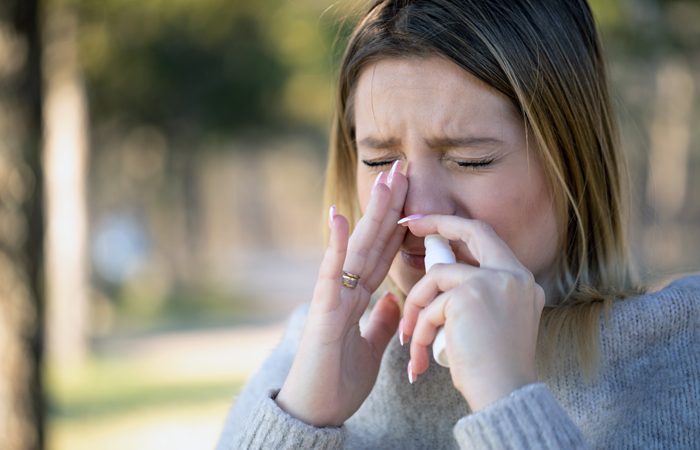

When to refer
- Shortness of breath or wheezing
- Asthma sufferers still having difficulty breathing despite using their inhaler
- Pregnancy
- If treatment is ineffective or symptoms persist after the end of September
- Very young children
- Painful ear, painful sinuses, purulent conjunctivitis
- Patients for whom hay fever medicines are contraindicated or who are taking interacting drugs
Useful clinical guidance
NICE Clinical Knowledge Summaries (CKS).
- Allergic rhinitis: background information, diagnosis, management, prescribing information
- Summary of NICE CKS guideline for community pharmacists
British National Formulary (BNF).
Specialist Pharmacy Service (SPS)
Royal Pharmaceutical Society (RPS)
Pharmaceutical Services Negotiating Committee (PSNC)
References

Share:


In Clinical
Let’s get clinical. Follow the links below to find out more about the latest clinical insight in community pharmacy.